Living Documents
On this page3 sections
Living documents are dynamic notes that evolve over time, continuously updated to reflect current understanding. Unlike static blog posts or finished articles, they embrace impermanence and growth.
Core Principles
Continuous Refinement
- Start with rough ideas, refine as understanding deepens
- No note is ever truly "finished"
- Each revision adds layers of insight
Small, Atomic Thoughts Following the Zettelkasten Method, each document should contain one clear idea that can be linked to others.
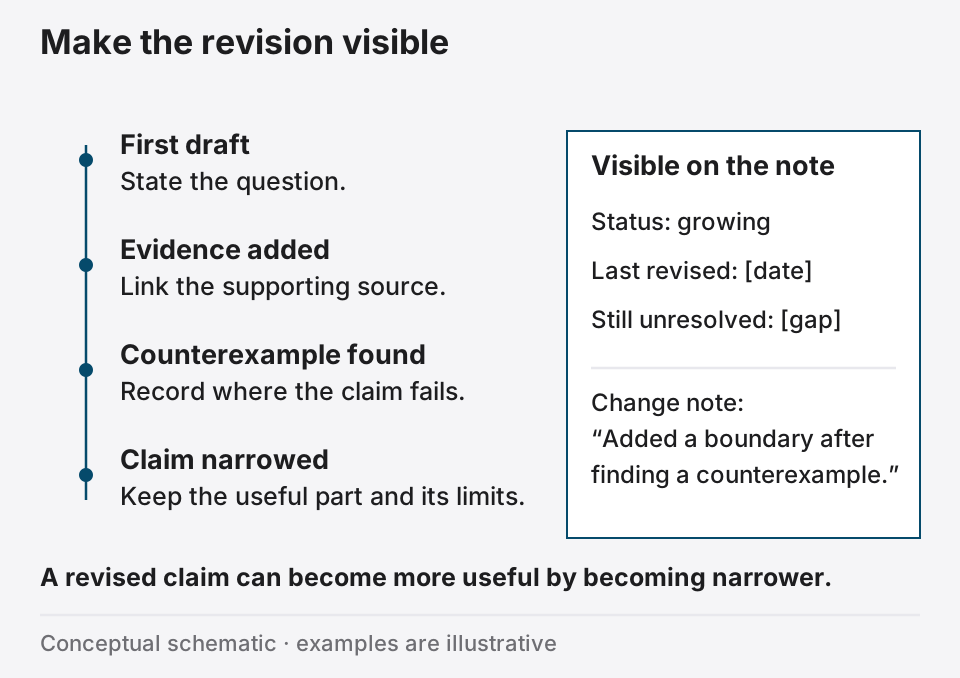
Transparency About State
- Mark notes with status (seedling, growing, evergreen)
- Date modifications to show evolution
- Acknowledge gaps and uncertainties
Why This Matters
Traditional writing creates pressure for perfection. Living documents remove that barrier by embracing the garden metaphor—ideas are planted, tended, and grown rather than manufactured and shipped.
This approach supports:
- Active Learning through iterative engagement
- Knowledge Organization that evolves naturally
- Digital Gardening as a sustainable practice
Related
Further reading
Maggie Appleton
A Brief History & Ethos of the Digital Garden
Make a note’s maturity, uncertainty and revision history visible to its readers.