Rate of Perceived Exertion
On this page4 sections
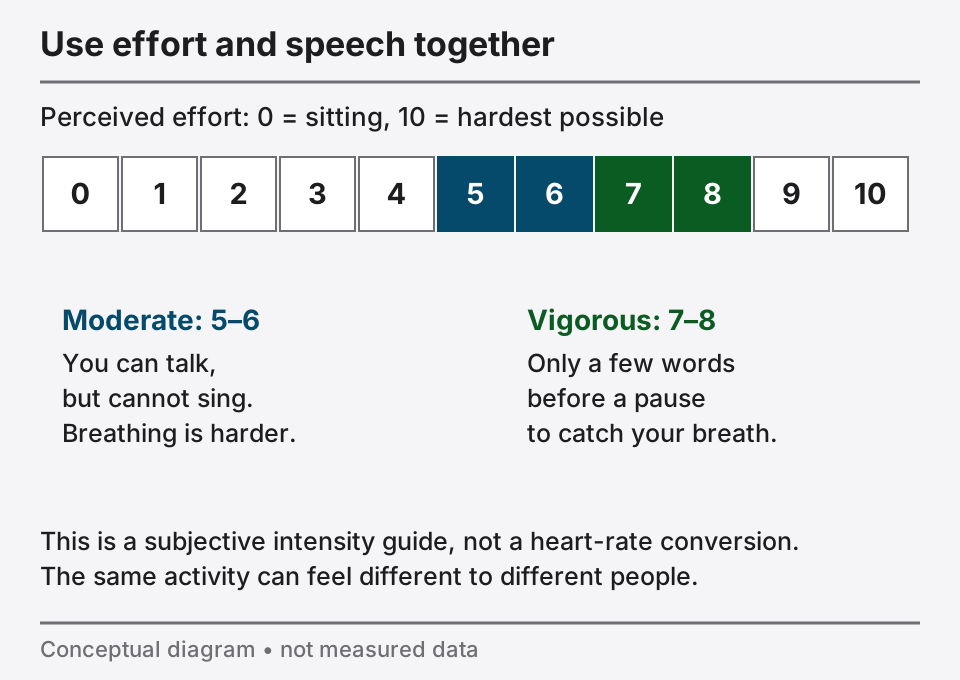
Rate of Perceived Exertion (RPE) is a subjective scale used to measure the intensity of physical activity. It helps individuals gauge their effort level during Exercise and adjust intensity appropriately.
The Scale
- 1-2: Very Light - Normal breathing, minimal effort
- 3-4: Light - Slightly increased breathing, can hold conversation
- 5-6: Moderate - Deeper breathing, still conversational
- 7-8: Vigorous - Heavy breathing, short phrases only
- 9-10: Maximum Effort - Cannot speak, complete exhaustion
Applications
- Helps track workout intensity without special equipment
- Useful for FITT principle implementation
- Supports progressive overload in training
- Aids in maintaining appropriate exercise intensity
Benefits
- Simple to understand and implement
- Requires no equipment
- Adaptable to any fitness level
- Helps prevent overtraining
Related Areas
- Exercise planning and progression
- FITT Principle implementation
- Wellness Journal tracking
Tip
Personal Calibration Your perception of effort may differ from others. Focus on consistency in your own ratings rather than comparing with others.
Further reading
Centers for Disease Control and Prevention
What Counts as Physical Activity for Older Adults
Compare perceived exertion with the talk test when judging moderate and vigorous activity.