Hook Model
On this page4 sections
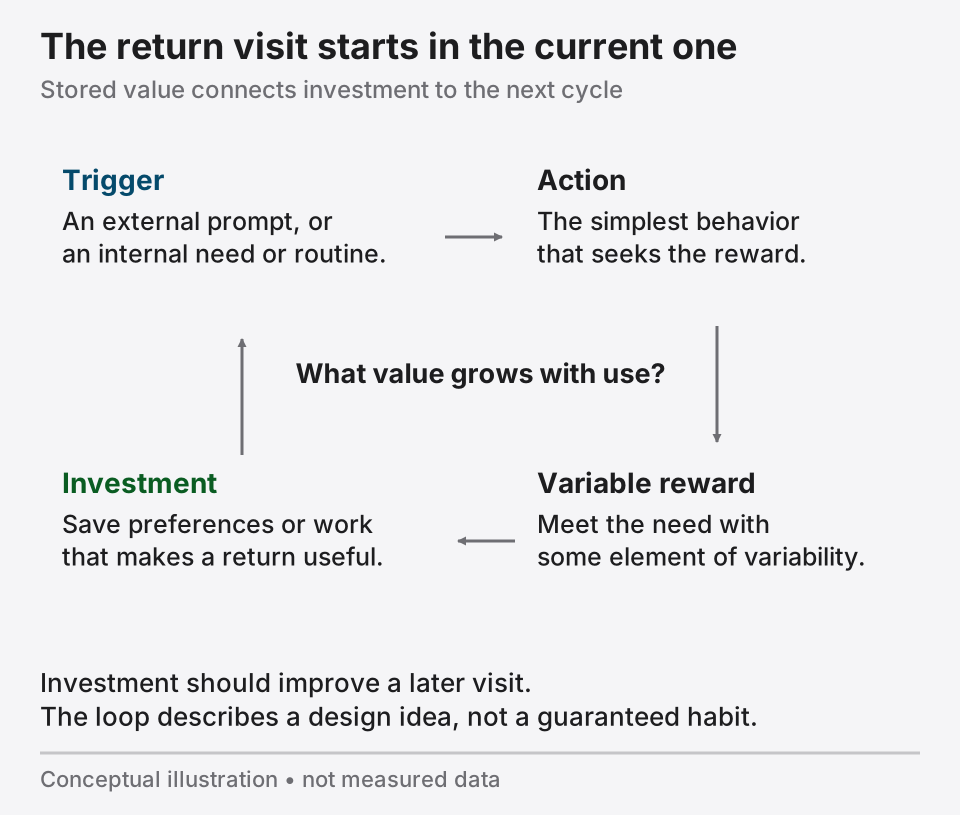
The Hook Model is a framework for creating products that encourage user habits through a cycle of triggers, actions, rewards, and investments.
Components
- Trigger: External (notifications, emails) and internal (emotions, routines)
- Action: Simplest behavior in anticipation of reward
- Reward: Variable rewards that fulfill user needs
- Investment: User effort that increases likelihood of returning
Usage
Used for creating products that encourage user habits and increase engagement. Helps design features that naturally draw users back to the product.
Best Practices
- Focus on user needs
- Ensure ethical use
- Regularly iterate
Examples and Applications
- Product Design: Build features that create habits
- User Engagement: Design compelling trigger-action-reward cycles
- Retention Strategy: Increase user investment in the product
- See also: Atomic Habits, HEART, AARM
Further reading
Nir Eyal
The Hooked Model: How to Manufacture Desire in 4 Steps
Examine how triggers, actions, rewards and investment connect across repeated product use.