Spaced Repetition
On this page7 sections
Overview
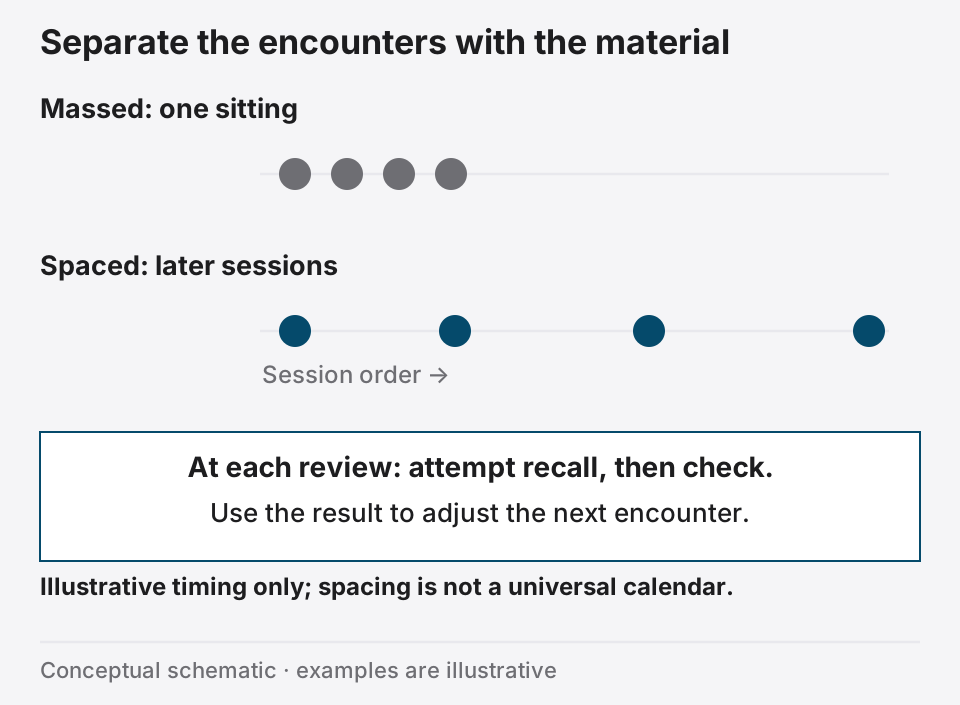
Spaced Repetition is a learning technique that involves reviewing material at increasing intervals to optimize long-term retention and memory consolidation.
Core Principles
The Forgetting Curve
- Memory naturally decays over time
- Regular review resets the forgetting curve
- Optimal intervals maximize retention efficiency
Review Schedule
- Initial learning
- Review after 1 day
- Review after 3 days
- Review after 1 week
- Review after 2 weeks
- Review after 1 month
- Review after 3 months
Implementation Methods
Digital Tools
- Anki - Popular spaced repetition software
- RemNote - Note-taking with built-in spaced repetition
- Quizlet - Flashcard platform with spaced repetition
- Obsidian plugins for spaced repetition
Manual Methods
- Physical flashcard systems
- Leitner box method
- Calendar-based review scheduling
- Personal review logs
Benefits
- Improved long-term retention
- Efficient use of study time
- Reduced forgetting curve
- Better knowledge consolidation
- Active recall practice
- Metacognitive awareness
Application Areas
Academic Learning
- Language acquisition
- Medical terminology
- Scientific concepts
- Historical facts
Professional Development
- Technical concepts
- Industry knowledge
- Certification preparation
- Skill reinforcement
Best Practices
- Create clear, concise cards
- Focus on understanding, not memorization
- Review consistently
- Adjust intervals based on difficulty
- Combine with other learning techniques
Related Resources
- Active Learning - Complementary engagement techniques
- Deliberate Practice - Focused skill development
- Learning Plan - Structured learning approach
- Progressive Summarization - Content distillation method
Further reading
Carpenter, Pan and Butler, Nature Reviews Psychology
The science of effective learning with spacing and retrieval practice
Read an overview of the evidence for spacing and retrieval practice and why learners may underuse them.
Anki Manual
Studying: Answer Buttons
Apply the answer ratings consistently so reviews reflect what you actually recalled.