Behavioral Interviews
On this page4 sections
Behavioral interviews assess a candidate's past experiences to predict future behavior in similar situations.
Core Components
STAR Method
- Situation: Context of the experience
- Task: Responsibilities involved
- Action: Steps taken
- Result: Outcome achieved
Common Questions
- Conflict resolution
- Team collaboration
- Leadership examples
Evaluation Criteria
- Communication skills
- Problem-solving ability
- Cultural fit
Application
1. Interview Preparation
- Reflect on past experiences
- Practice STAR responses
- Align with job requirements
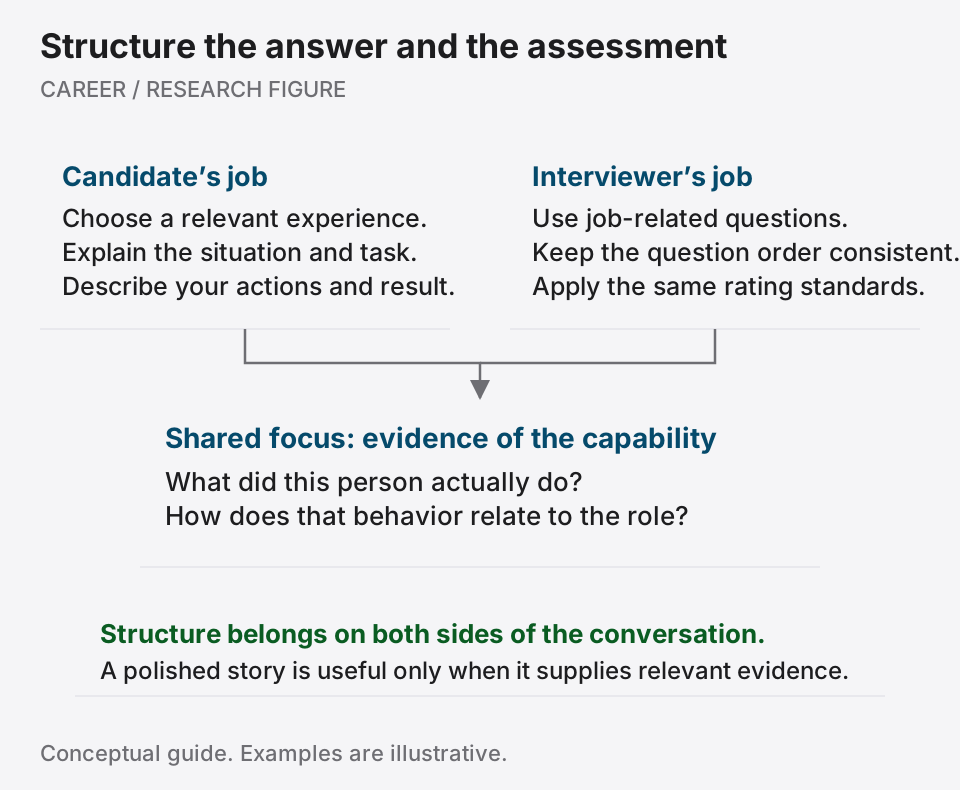
2. Candidate Assessment
- Consistent evaluation
- Objective criteria
- Comprehensive understanding
Best Practices
- Use structured questions
- Focus on relevant experiences
- Provide clear feedback
Related Resources
- Interview Preparation Hub - Comprehensive interview resources
- STAR Method - Structured response framework
- Interview Presence - Building confidence
- Case Interviews - Alternative interview format
- Communication Skills - Effective interview communication
Further reading
U.S. Office of Personnel Management
Structured Interviews
See how structured interviews assess job-related competencies using consistent questions and rating criteria.
MIT Career Advising & Professional Development
Interview Primer
Prepare clear examples that distinguish the situation, your responsibility, your actions and the outcome.